Country Over Party
Defending American interests against our enemies is good, even when Donald Trump is the one doing it.
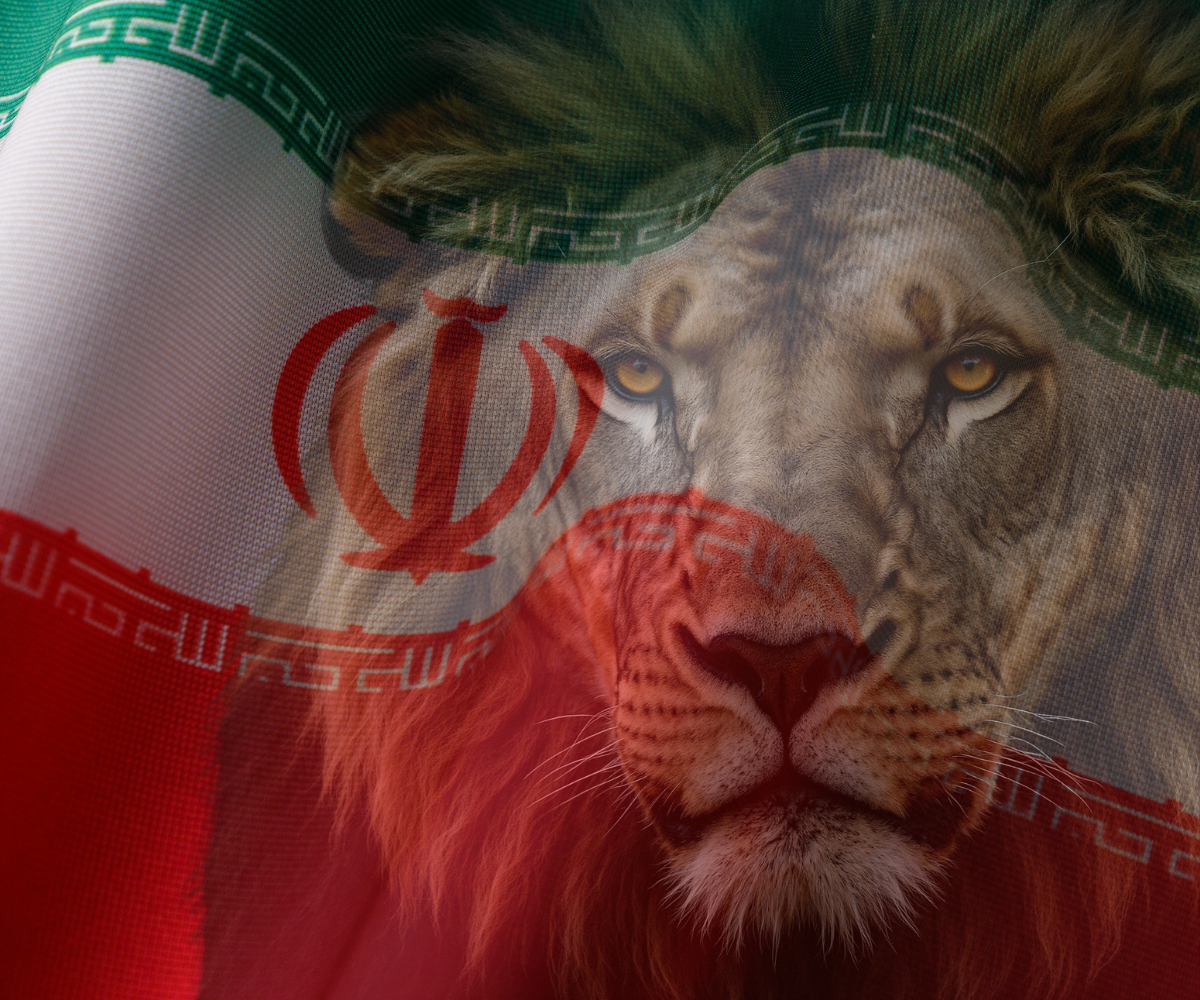
For the past decade, we have heard the phrase Country over Party bandied about repeatedly, primarily by former conservatives and Republicans who became disillusioned with the party and the broader movement for Donald Trump’s elevation to the Oval Office. They have argued that Trump himself is an existential threat to American democracy, claiming that he is paving the path to authoritarianism in Washington. He has been routinely compared to Hitler, his supporters—many of the same people who have voted for more “normal” Republicans for decades—labeled fascists, and his policies declared dictatorial. As such, the solution proffered by these Never Trump figures is simple: vote for Democrats until the Republican Party regains some sense and cuts out the cancer of Trumpism. To them, this is what it means to put the future of American democracy over one’s own personal politics, even if it may lead to some suboptimal policy outcomes along the way. Still, that’s a trade they were more than willing to make to safeguard the Republic.
Setting aside whether the Never Trump analysis of the new Republican Party is correct, whether voting for Democrats is a viable solution to the problems they identified, or whether the MAGA movement really is a dire threat to America’s future, these figures largely seem to buy what they are selling. Some may see this turn toward promoting Democrats as cynically finding a new audience from which to make money, but many of these Never Trumpers honestly believe that they are doing the right thing to save the nation they love. In that, they certainly are putting Country over Party. Now, however, the shoe is on the other foot—and the same people who lambasted conservatives for supporting Trump as the GOP standard-bearer are themselves putting their new party over the country’s best interests.
The Iran War has been an incredibly clarifying experience in this regard, exposing in stark relief whether the pundits and activists who claimed the mantle of Country over Party actually meant it. To be sure, there have been other events that laid bare this false principle, but they have primarily been domestic in nature. Across two terms, we have seen the fall of Roe v. Wade (largely due to Supreme Court justices appointed by Trump), the effective cessation of illegal border crossings from Mexico, and immense deregulatory action to reduce the scope of the administrative state—all longstanding conservative priorities, all lamented to one degree or another by the Never Trump crowd. What we had not yet seen, at least to this extent, was this lamentation applied to an actual war that the United States is directly involved in.
This is the biggest problem: not that these Never Trump figures are opposing the war against Iran, but that they are doing so in complete repudiation of their supposed principles and prior public positions, simply because they detest the man in the Oval Office.
America has been in a state of war against the Islamic Republic of Iran for the past few weeks, hitting the regime’s military apparatus, nuclear program, internal repression forces, weapons factories, and command structures. Alongside Israel, the US has massively degraded these targets and gained complete air supremacy, all while limiting Iranian retaliation and American casualties. The Ayatollah is dead, Iran’s navy sits at the bottom of the Persian Gulf, the country’s defenses have been obliterated, and the IRGC’s economic bulwark is being systematically blown to pieces. The American and Israeli militaries have operated in lockstep, and our weapons systems, from interceptors to aircraft, have worked nearly flawlessly; on the contrary, Iran’s response has been shambolic and flailing, with failed offensive and defensive weapons systems, total penetration by Israeli intelligence, and unprovoked attacks on various uninvolved nations across the region, alienating potential future partners. The main issues raised thus far—the temporary closure of the Strait of Hormuz, the potential for regime change, and what comes after—are all either surmountable or not themselves indicative of failure.
By all reasonable understanding of the tactical and strategic landscape a fortnight into this conflict, this campaign has been an immense success. The cost in blood and treasure for the damage we have done to the Islamic Republic is about as low as could reasonably be expected. And things are continuing apace, with a meaningful deterioration in Tehran’s daily launches of missile and drone attacks paired with sustained operational tempo and excellence from the US-Israeli partnership. Yet large segments of the Never Trump contingent seem dedicated to presenting it as an abject catastrophe. In the process, they transform successes into failures, advance enemy propaganda, and reverse reality—and their own past positions—entirely.
For instance, one common line of attack argues that the newly elevated figures in the Iranian regime are going to be much worse for the US, as they are the real hardliners, whereas their now-dead predecessors were more pragmatic or moderate. The problem is that there are no moderates in the mullahcracy. The supposedly less-radical leadership of that evil regime was fresh off attempting to build a nuclear weapons program, launching a genocidal multifront war against Israel, promoting regional and global terrorism that has killed thousands of Americans, and massacring tens of thousands of their own people in just a few days. They were not pragmatic moderates; they firmly believed the regime’s destiny was to bring about the end of days by destroying America and Israel, ushering in an everlasting worldwide Islamic dominion. At some point, a marginal increase in radicalism is meaningless. We reached that point with respect to Tehran decades ago. The replacement of experienced radicals by inexperienced radicals is a victory for America, not a defeat.
Seasoned Iran-watchers will certainly recognize this trope from the not-so-distant past. It was famously floated by the Obama administration in support of their flawed nuclear deal with the mullahs. Back then, they claimed that unless a deal favorable to Tehran was struck immediately, the hardliners would force a war. Ironically enough, many of the same people who rightfully attacked that spurious argument a decade ago are now using it themselves. This is the biggest problem: not that these Never Trump figures are opposing the war against Iran, but that they are doing so in complete repudiation of their supposed principles and prior public positions, simply because they detest the man in the Oval Office.
Many of these figures, best represented by Bill Kristol, have supported the idea of forcibly changing the regime in Tehran for nigh-on 20 years. They have argued against diplomatic negotiation and for military action to end the Iranian nuclear program. They clearly recognized and publicly expostulated the case for why the Islamic Republic posed a significant threat to American interests and security. They wrote policy papers, penned essays, led organizations, and promoted political candidates in favor of this message. And now that their decades-long quest is finally coming to fruition, they have done a complete about-face.
Instead of supporting a righteous war against a serious, longstanding threat to American security—one that was actively in the process of pursuing nuclear weapons and a conventional ballistic missile deterrent to protect that program—many Never Trumpers have turned wholesale against it. They no longer seem to recognize the danger posed by Tehran, even though it has palpably increased over the past decade, one in which they launched the October 7 war against Israel and tried to assassinate opponents on US soil, notably the current President of the United States. They no longer seem to see the utility of using America’s incredible military power to achieve national objectives. They no longer seem concerned that they are consciously parroting the talking points of the enemies of America. The worst part is that every last bit of this is due to the man who was duly reelected as president less than two years ago.
The Country over Party set is not making reasoned critiques of the specific tactics or stratagems of the administration but rooting wholesale against American victory, simply because it might hurt Donald Trump’s approval ratings. They uncritically repeat the press releases of the Iranian regime, taking their word as bond; at the same time, they strenuously question and distrust the facts proffered by our military and civilian leadership. American strategy is poorly reasoned, and our tactics are either inadequate or over-the-top, depending on which is more beneficial to the narrative at any point in time. For example, the US has been criticized for not having secured the Strait of Hormuz immediately, while also being attacked for sinking an Iranian warship on its way back to that combat zone—an action without which we would be unable to secure said waterway.
These statements are meant only to craft a narrative of failure, regardless of the actual results and even if their arguments are self-contradictory. As long as they work in the moment, that is all that matters. It is cynical posturing that has one guiding principle only: antipathy for Donald Trump. Anything can and will be used in service of that principle. And anyone can and will be aligned with—from the progressive Squad and Tucker Carlson to the Iranian regime itself—to do so. But there is simply no need to do this. If Donald Trump decided to say that puppies and babies are cute, it is not incumbent on an opponent of his to argue that they’re hideous. That is especially true if that same person had been praising that adorableness for decades prior. That is the position that the Never Trump opponents of this war find themselves in. It is a test of their actual principles, and they are failing miserably. In short, their hatred for our president has overwhelmed their love for our country.
This is the epitome of the approach they claim to abhor. They are the ones putting Party over Country. But those who are otherwise critical of the president need not follow this primrose path. They can root for American victory and recognize success when it exists, while also criticizing the president’s conduct of this or other issues. Stating that the war has, to this point, been far more positive than negative for America and our allies does not preclude one from critiquing Trump’s mixed messaging on long-term strategy or any of his actions in other theaters (i.e., Ukraine). Foreign policy can be triumphant and domestic policy can be terrible; these are not mutually exclusive. Supporting the war aims of degrading the Iranian regime and aiding the Iranian people in toppling it does not make one MAGA. It does not even make one into a fan of the president. It just makes one a supporter of one particular policy.
Every American who understands the danger posed by the Islamic Republic of Iran, mourns the thousands of their fellow countrymen murdered by that regime, and revolts at the mass murder of civilians carried out under its orders, should support this policy. It has been amazingly successful already, the challenges to continued success are surmountable, and our military is performing spectacularly in concert with allies across the region. The war against Iran is critical for securing our national interests and defending ourselves from a rising threat, one that has been dedicated to harming us for nearly half a century. Although this war is being led by Donald Trump, it is still just, and it is still good for America—even a broken clock is right twice a day. Allowing partisan hatred to obscure the national interest is not how critics of Trump should view this conflict. Instead, they should heed their own advice and put Country over Party.