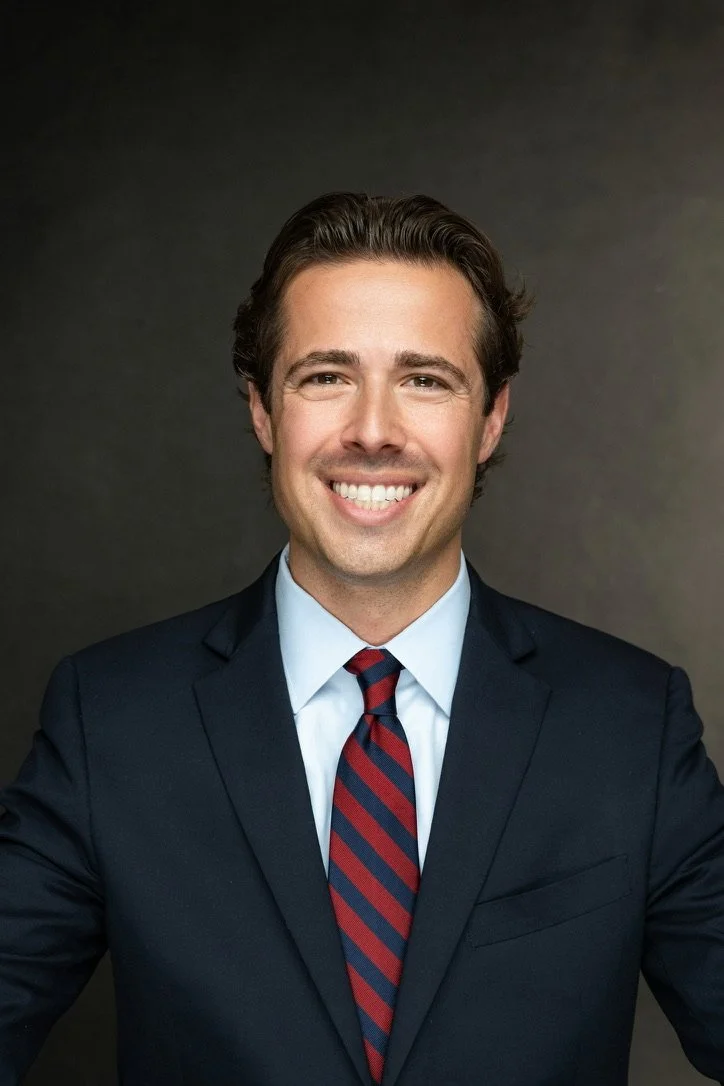
Your heart pounds as you await an outcome that, for readers of the book, you know is coming. This is the beauty of a film adaptation of what was already an epic original work.
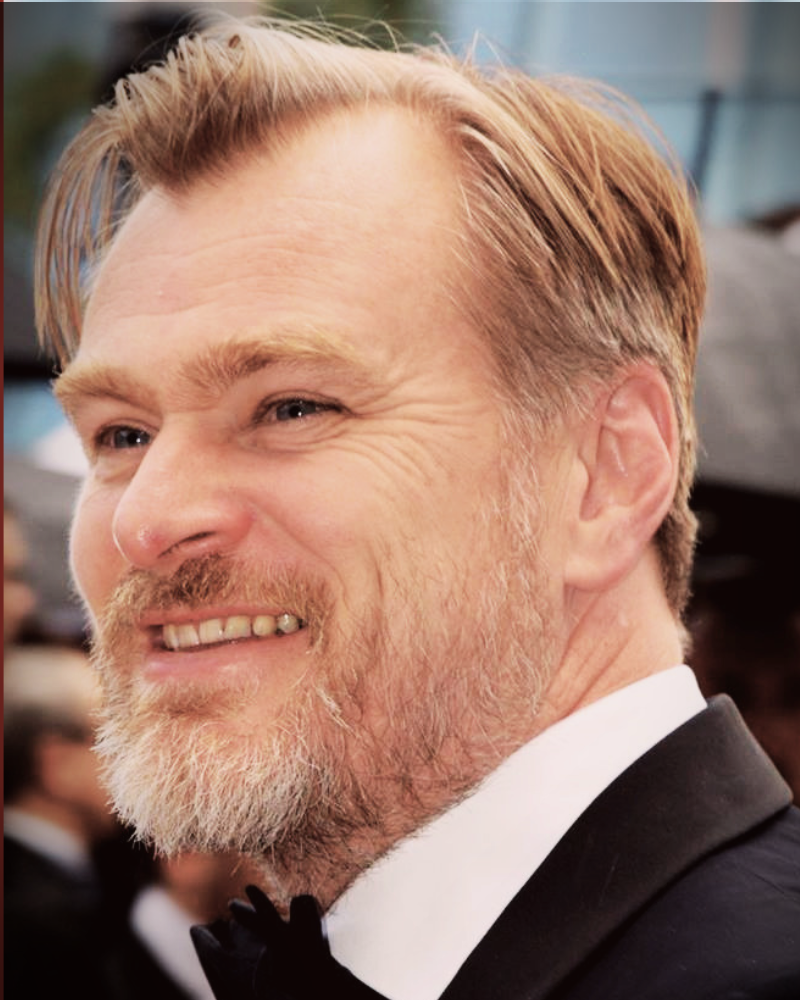
Christopher Nolan at the 2018 Cannes Film Festival. Photo by Georges Biard (May 2018), licensed under CC BY-SA 4.0. Modified from the original.
This article is the second in a series of reviews of and reflections on Christopher Nolan’s 2026 film The Odyssey. Reviews do not necessarily reflect the views of the editors.
My two daughters (Shiloh, nine, and Eden, five) have recently developed a passion for the Greek Classics. It’s something I could only have dreamed of when I married my wife nearly twelve years ago. Early on, I related to her how important my half-Greek heritage was to me and how I hoped to preserve in our future children an appreciation of our ancestors’ contributions to Western education, politics, and philosophy. When our girls were little, neither of us had any idea how to ignite their interest. Over the past year, however, my daughters have begun listening to the fantastic “Greeking Out” podcast by National Geographic Kids, and their imaginations have been captured by vivid retellings of Greek mythology, including, yes, a multi-part series on the Odyssey.
This recent obsession of theirs has led to hilarious interactions with adults and children alike. Shiloh has taken to asking adults about details of Clytemnestra and Agamemnon’s backstory. Eden likes the self-made nickname “Aphrod-Eden.” I have found that in nearly every situation, whether with adults or my daughters’ peers, I must do a lot of work to explain what story or characters they are referring to.
Most Americans today have never read the classics, and many are not aware of their influence on the underpinnings of American thought. For many reasons, which are not the purpose of the current essay, this is a tragedy and has had spectacular consequences for our society. Suffice it to say, for a period of 250 years or more, you couldn’t have graduated from an American college without having read Homer and other classics. Virtually all of America’s founding fathers knew the Odyssey, line and letter. This commitment to the Western Canon can no longer be found.[1]
“Upgrading Odysseus’ valor and his morality presents an Odyssey that espouses the virtue of Christendom and its incorporation of the classics.“
I count myself among the ranks of people who believe that great efforts are urgently needed to change this. Enter Christopher Nolan and his tremendous film, The Odyssey.
The film is one of Nolan’s best. The most pleasant surprise, to me, was his ability to deliver a single, feature-length film that followed the vast majority of Odysseus’ “roundabout ways” (Mendelsohn translation) faithfully and with his vintage, thrilling style that audiences have come to love. More importantly, he adapts the story successfully, not just to enhance the adventure, but to enrich the virtue of the story. Finally, and most importantly for me, Nolan has elevated this nearly three-thousand-year-old story in a way that no one else can, returning American audiences to the classics. For this alone he deserves credit.
First, let us look at the film itself. My wife and I caught it on 70mm IMAX, and it is a visual feast. There is simply no way to describe how beautiful the visual presentation was. Ludwig Göransson’s soundtrack, replete with ancient Greek instruments, creates an emotional investment in the story that weds the greatness of this age's technology with the imagination of Homer’s. I came into the film with low expectations for how much ground Nolan could truly cover from the book. Given the vicissitudes of Odysseus’s life in the story, there was simply no way to cover everything. I was pleasantly surprised by how much made it into the film.
Sure, he leaves out elements like the lotus eaters and reframes Circe. But compare this film to the much slower-burning, lighter plots of the Dune films. There, another legendary director, Denis Villeneuve, reveals just how hard this is to do. The complexity of the plots of the Dune books is, in my opinion, far less than that of The Odyssey. Villeneuve masterfully retells them, first by breaking them into multiple films, and then by simplifying and slowly pulling back each layer of the plot. The Odyssey would not have made sense to tell in multiple films, yet it had so much work to do in such limited time. The film easily could have come across as a running list of events Nolan was checking off. Instead, he kept most of the story and told it with intrigue and clever adaptation.
Indeed, Nolan made The Odyssey much more engaging. In the book, when Odysseus returns home, the wait for his revenge on the suitors drags out in ways that can lose today’s audiences. In the film, Göransson’s soundtrack bears down on you as Odysseus wins the competition, reveals himself, and begins destroying the boorish men who have been devouring his household. Your heart pounds as you await an outcome that, for readers of the book, you know is coming. This is the beauty of a film adaptation of what was already an epic original work. Another key improvement, in my opinion, was the camaraderie between Odysseus and Eurylochus. Nolan expands it by even alluding to Eurylochus saving Odysseus during the sack of Troy. Their characters exude a form of brotherhood in war that I enjoyed a great deal. It is likely due to the age of the original work, but this dynamic just isn’t present in the book.
My main critique was the reduced role of the gods in the story. I would have liked to see Nolan include Hermes, given how central his role was in advancing the plot and freeing Odysseus from Calypso. That felt like a missed opportunity. On this point, I concede some ground to the classicist Thomas Banks, whose sharply critical review opened this series; he described the film as “almost utterly devoid of the religious qualities of its literary source.” I think the effect was more nuanced. Nolan masterfully included Athena. Zendaya was a believable Athena both in appearance and performance. And, by incorporating her faithfully (and with a few novel artistic touches) into the story, the film incorporates the gods more than another great Greek adaptation did: Troy. Much of the early controversy around the film involved comparisons to Troy, and while I watched, I also compared it. This film was made for a different purpose, but where Troy banished the Olympians from the screen entirely, Nolan restores at least one of them to us, and I was happy to see more of the supernatural at play.
While he was faithful to most of the story, Nolan adapts the work in ways that renewed my faith in Hollywood’s ability to celebrate virtue. This is no more evident than when he fundamentally altered the plot to erase Odysseus’ dalliances—a willing year with Circe, and a captivity-turned-cohabitation with Calypso, which the poem records without a word of repentance—and reframes Odysseus as a noble husband truly eager to return to his wife and who appears to remain faithful. As a Christian reader, the book’s attempt to tug at my heartstrings for the time Odysseus spent away from his wife rang hollow, given the presence of Odysseus’ infidelity. I understand that at this time, in Greek culture, the behavior wasn’t frowned upon as it is now. But watching Matt Damon play an Odysseus who embodied the virtues of monogamy and honesty, as well as the glorious values of integrity, commitment, and valor that the Western tradition at its best has always prized, invested me much more in his plight. It also provided a tapestry on which Nolan painted a touching romance between husband and wife that was powerfully felt. And Nolan is not inventing this devotion; Homer laid the groundwork for this when Penelope tests her husband and Odysseus tells the secret only the two of them share—a marriage bed he carved from a living olive tree: “The trunk of a slender-leaved olive was growing inside the courtyard, flourishing… I built the chamber until I’d finished it off” (Od. 23.190–201, trans. Mendelsohn). The marriage bed rooted in the earth is the poem’s own foundation for fidelity, and Nolan’s faithful Odysseus personifies this. I must also add that Anne Hathaway’s performance (coming from someone who rarely enjoys her films) was one of her very best.
Damon’s Odysseus is just the form of male example that this generation of men needs. In the film, we are presented with a man who honors his wife and elevates her above others. A man who loves and cherishes his son (I would argue that the film displays this even more warmly than the book). In Homer, a father’s love speaks in commands: as the final fight is joined, Odysseus turns to his son and charges him “never to bring disgrace on the house of your fathers, who always surpassed other men in might and valor throughout the world” (Od. 24.505–509). The film warms this voice considerably. You feel the father’s heart sing when he is reunited with Telemachus. They work together more harmoniously in the film than in the book, especially since Nolan does not feature Telemachus’ error that allows the suitors to arm themselves.
This Odysseus is a servant leader who doesn’t merely command and ignore the plight of his men but grabs an oar to help row. Damon’s Odysseus leads his men, not with machismo, but with a firm yet kind word, as when he gives his men choices and supports them even when they take the wrong turn (which ultimately leads to their death). Instead of reveling in the glory of the sack of Troy, he contemplates its moral implications—not to detract from necessity or war, but to give it the gravity it is due.
Upgrading Odysseus’ valor and his morality presents an Odyssey that espouses the virtue of Christendom and its incorporation of the classics. In this respect, Nolan is like Thomas Aquinas, who did more than most to marry the best parts of Greek and Roman thought with scripture, for immense benefit to society and to the foundations of good governance.
The Odyssey is a story, composed nearly three thousand years ago, that even well-educated readers today will struggle to engage with. It is timeless; it is rich with lessons and history, and it has much to give to audiences today. But its story and influence have receded from many of the general public’s memory. As I sat in the audience and looked around me, I saw people of every age, ethnicity, and walk of life full of excitement and wonder. I thought of my ancestors who helped carry down this story and tradition over thousands of years. I was chilled by the enduring value of this story and how Nolan made it relevant to contemporary audiences, giving this generation some ownership over the story. The film has delighted audiences and engaged people in every corner and of every political stripe in the debate about its place in history. That means he did it right.
As I walked out of the theater with my wife, I contemplated whether any other director could do this story justice. There isn’t anyone else who can come close to Nolan’s historic directing prowess. One of the world’s greatest stories deserved the world’s greatest director.
Our daughters will probably have to wait to see it, much to their chagrin, but the result was the best film of the year.
Endnote
[1] Except among rapidly growing Classical Schools—an exciting recent development in K-12 education.